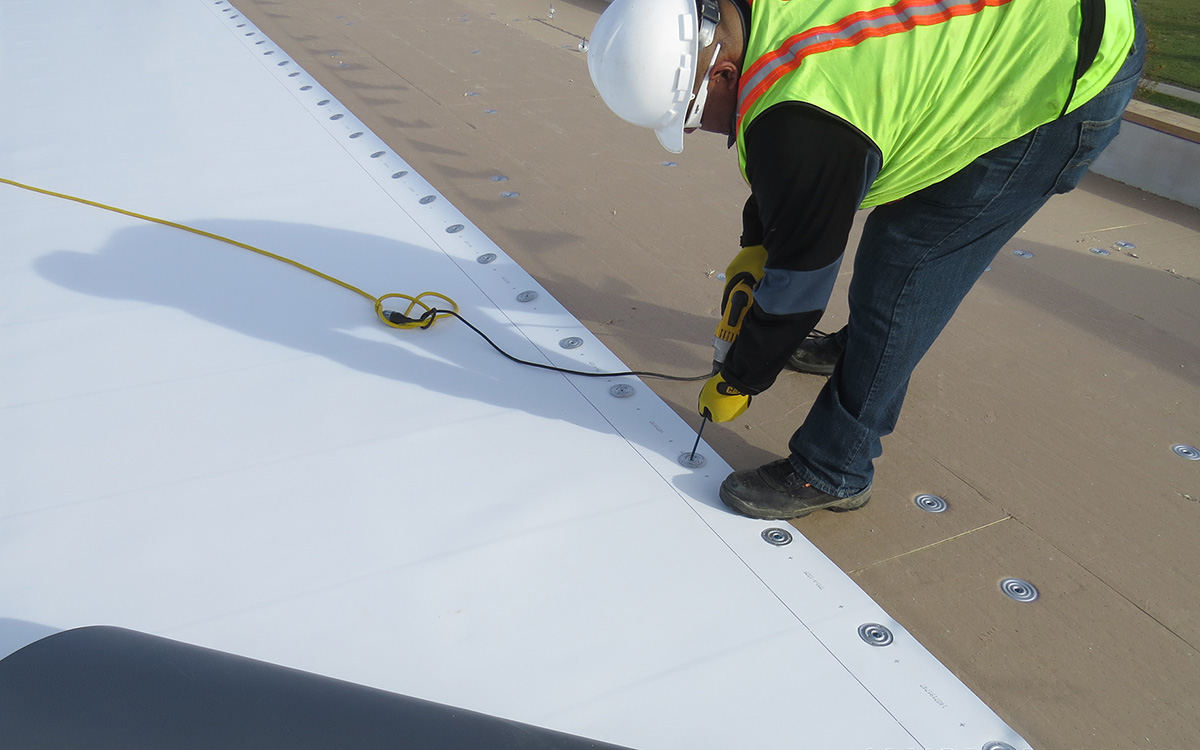
Roof Waterproofing
Roof Waterproofing in Tacoma extends well beyond the conventional flat membrane — it encompasses plaza decks over occupied space, parking structure decks, below-grade foundation walls, and the buried horizontal surfaces of mixed-use developments where waterproofing failure means damage not to a warehouse floor but to retail tenants, residential units, or below-grade mechanical systems. The Thea Foss Waterway mixed-use corridor, the transit-adjacent development around Tacoma Dome Station, and the urban infill projects coming into the Sixth Avenue and Hilltop neighborhoods all produce building types where waterproofing is a structural envelope system, not just a roofing membrane.
Plaza deck waterproofing — the systems applied under pavers, planters, and pedestrian surfaces on occupied podium buildings — must perform in Tacoma's sustained-rain environment while supporting live loads and resisting the freeze-thaw cycles that occur on Tacoma's 21-plus freezing nights per year. The waterproofing membrane on a plaza deck is inaccessible once the wearing surface is installed, which means the selection of the right system and the quality of the installation are the only opportunities to get it right. There is no routine maintenance access to a buried membrane; there is only the correct installation the first time, followed by eventually tracing a failure and excavating the wearing surface to expose and repair the membrane below.
Hot-applied rubberized asphalt is the workhorse plaza deck waterproofing system in the Pacific Northwest — it is self-healing at minor penetrations, accommodates substrate movement well, and performs reliably in the cool-wet conditions that characterize Tacoma's climate. Fluid-applied polyurethane and PMMA (polymethyl methacrylate) systems are alternatives for projects where hot-applied work is logistically constrained or where fast-cure properties are required. We select the waterproofing system based on the structural substrate, the wearing surface to be installed above it, the load conditions, and the accessible cure time given the project schedule.
Parking structure waterproofing is a specialized category where the Tacoma market sees significant demand — the transit-adjacent developments near Tacoma Dome Station and the structured parking that serves Downtown Tacoma's commercial core both involve exposed concrete decks subject to water infiltration, deicing chemical exposure, and the wheel-load cycling that degrades both the concrete and the waterproofing membrane over time. Vehicular traffic-rated waterproofing systems — typically polyurethane or epoxy-polyurethane hybrid systems with a traffic-wear top coat — must balance waterproofing performance with resistance to tire abrasion, fuel and oil spills, and the UV exposure that affects top-deck applications.
Below-grade waterproofing on Tacoma buildings — foundation walls, below-grade retail or parking levels, elevator pits — operates in a different exposure regime than roof-level systems: constant hydrostatic pressure from Tacoma's high water table in low-lying areas near the Tideflats and Thea Foss Waterway, lateral groundwater movement, and the soil chemistry of Pierce County's varied geology. Below-grade waterproofing systems — crystalline admixtures, sheet-applied membrane, blindside waterproofing installed against shoring before the foundation wall is poured — must be selected based on soil conditions, water table depth, and whether the waterproofing is applied from the positive or negative side of the pressure.
Historic buildings in Downtown Tacoma and Old Town that are being converted to mixed-use or residential use frequently require plaza or courtyard waterproofing as part of the adaptive reuse scope. These projects add the complexity of working over occupied historic structures where the loading assumptions for the original building must be verified before any new overburden — planters, pavers, mechanical equipment — is added to the deck above. We coordinate with structural engineers on loading assessments for adaptive reuse waterproofing scopes and size the waterproofing system for the confirmed load conditions rather than assuming the original structure can accept additional weight without analysis.
Green roof assemblies — increasingly specified on Tacoma mixed-use and institutional buildings — require waterproofing systems that can perform under continuously moist soil overburden, root penetration pressure from plantings, and the extended saturation that Tacoma's wet season creates in the growing medium. Root-resistant waterproofing membranes — either factory-laminated root barriers or separate root barrier sheets over the waterproofing membrane — are required under any planted assembly. We coordinate green Roof Waterproofing scopes with landscape architects and structural engineers to ensure the waterproofing system, drainage layer, filter fabric, growing medium, and planting plan work as an integrated system.
Waterproofing failure investigation on existing buildings requires systematic testing to locate the breach without excavating the entire wearing surface. Electronic leak detection — either vector mapping or low-voltage survey methods depending on the wearing surface type — identifies the membrane breach location within a manageable area so that only the affected zone of the wearing surface needs to be removed for access and repair. We use electronic leak detection on all plaza deck failure investigations rather than exploratory excavation, which is destructive, expensive, and often identifies the wrong location when the leak source is remote from the interior drip point.
Roof Questions
How do you find a leak in a below-grade or plaza deck waterproofing system?
Electronic leak detection is the primary tool for inaccessible waterproofing failures. For plaza decks with non-conductive wearing surfaces, vector mapping applies a low-voltage electrical field across the membrane and identifies breaches by measuring electrical continuity — water at a membrane breach creates a detectable conductive path. For below-grade walls, the investigation typically involves exploratory probing at the interior surface to correlate water entry patterns with the exterior waterproofing condition. We identify the breach location before any excavation or demolition, not after.
How long should plaza deck waterproofing last in Tacoma?
A properly installed hot-applied rubberized asphalt or quality fluid-applied system on a well-designed plaza deck should perform for 20 to 30 years before replacement is required. Tacoma's cool, wet climate is not particularly aggressive for buried membrane systems — the absence of freeze-thaw extremes that damage waterproofing in colder climates is a genuine advantage. The primary variables that shorten plaza deck waterproofing life are installation defects, inadequate drainage in the overburden layer, and root intrusion from plantings installed without root barriers.
Does parking structure waterproofing in Tacoma need to resist deicing chemicals?
Tacoma's mild winters — averaging 21 freezing nights per year but rarely experiencing prolonged hard freezes — mean that deicing chemical use is less intense than in colder markets. However, vehicles tracked with highway deicing compounds from I-5 and SR-167 still bring chloride contamination into parking structures, and the waterproofing and traffic coating systems on Tacoma parking decks should be specified with chloride resistance in mind. Epoxy-polyurethane traffic coatings with appropriate chemical resistance are the standard specification for Tacoma parking structures.
What is blindside waterproofing and when is it used?
Blindside waterproofing is applied to the exterior face of a shoring wall or forming system before the foundation concrete is poured — the waterproofing ends up on the soil side of the foundation wall, inaccessible after construction, hence "blindside." It is used when there is no excavation access to the exterior of the foundation wall after construction — common on tight urban infill sites in Downtown Tacoma or on the Thea Foss Waterway where the building is constructed against a property line or existing structure with no exterior access clearance.
Can waterproofing be applied from the inside of a building?
Crystalline waterproofing systems can be applied to the negative side — the interior face — of concrete walls and slabs and migrate into the concrete matrix to seal cracks and pores. This is an option when exterior excavation is not feasible. Negative-side waterproofing is limited to concrete and masonry substrates and works only when the concrete is sound and structurally intact. It does not replace positive-side membrane waterproofing on new construction, but it is a viable remedial option for existing below-grade concrete with active seepage.