Retail and Shopping Center Roofing
Tacoma's retail landscape has undergone significant evolution over the past decade, with the Tacoma Mall remaining the regional anchor while newer development along South Steele Street, the 6th Avenue corridor, and the commercial zones near the Tacoma Narrows draw increasing retail activity from Pierce County's growing population. Property owners managing retail assets in Tacoma operate in a market that sits in Seattle's commercial shadow but increasingly attracts tenants seeking lower occupancy costs with access to a customer base that has expanded dramatically alongside residential growth in the South Sound region. The commercial roofing challenge for Tacoma retail is fundamentally the same as the broader Pacific Northwest experience — managing sustained rainfall exposure for months at a time — but with the added complexity of Tacoma's industrial history creating a building stock where some commercial structures have environmental considerations that affect how roofing work is planned and executed.
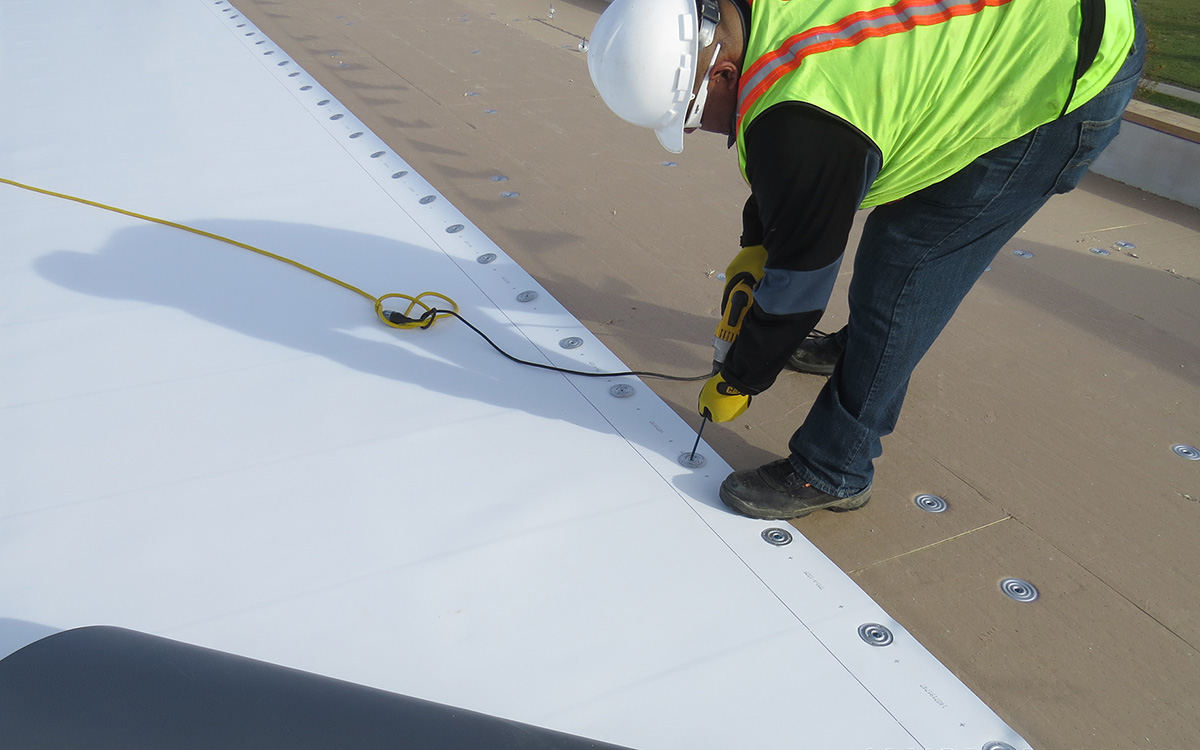
Tacoma receives approximately 38 inches of annual precipitation, somewhat less than Seattle but still substantially more than most American cities, and the distribution of that rainfall across the October through April window means that Tacoma retail roofs are subjected to continuous moisture exposure for six months per year. The practical implication for commercial roofing is that small deficiencies in seam quality, flashing terminations, or drain clearance that might go undetected for years in a drier climate become active failure points within one wet season in Tacoma. TPO with heat-welded seams remains the dominant commercial roofing specification in this market because the weld quality that skilled thermoplastic installers achieve creates seam bonds that genuinely outlast the base membrane — eliminating the seam as the system's most vulnerable component rather than accepting it as such.
The Tacoma Mall area, with its anchor department stores, inline retail, and the surrounding power center development along South Steele Street, represents the highest concentration of large-format retail roofing in Pierce County. Managing re-roofing projects on occupied portions of a major regional mall requires phasing discipline that maintains watertight conditions over occupied tenant spaces at all times, with each day's tear-off and new membrane installation sequenced to complete a defined section before the crew departs. Tacoma's fall and early winter precipitation pattern — consistent light rain punctuated by occasional moderate events — makes the "no open deck overnight" standard even more critical than in markets where weather forecasts are more predictable. Experienced Tacoma commercial roofers build contingency time into project schedules specifically for weather holds, rather than proposing aggressive timelines that require good luck to achieve.
The 6th Avenue retail corridor and the neighborhood shopping areas of North Tacoma serve a different retail profile than the South Sound power centers — smaller storefronts, more local and regional tenants, and older building stock that includes masonry commercial buildings from the early twentieth century. Many of these properties have low-slope roofs concealed behind decorative parapets, where accumulated re-roofing layers and inadequate drainage configurations have been patched over multiple times without resolving the underlying system issues. Commercial roofers experienced with Tacoma's older urban retail stock approach these properties with the understanding that what the roof looks like from ground level gives no reliable information about what is happening at the membrane and deck level — only a hands-on investigation, core sampling, and drain capacity assessment reveals the actual condition.
HVAC penetration management for Tacoma retail buildings involves the same cold-season condensation challenges present throughout the Pacific Northwest, but with the added consideration that Tacoma's position near Commencement Bay means that salt-laden marine air can accelerate corrosion on exposed metal roofing components more aggressively than in inland Washington locations. Metal coping caps, equipment curbs, pipe penetration sleeves, and drain assemblies on Tacoma retail buildings near the waterfront corridor should be specified in corrosion-resistant materials — aluminum, stainless steel, or galvanized steel with regular paint maintenance — rather than the bare steel components that work adequately in less corrosive environments. Annual inspection of all metal roof components for rust initiation, with immediate touch-up on any identified areas, prevents the accelerated deterioration that allows corrosion to create waterproofing failure pathways at roof perimeters and around penetrations.
Tenant disruption planning for Tacoma retail properties requires particular attention to the customer access patterns of a market where a significant portion of shoppers arrive by car and parking lot availability directly affects customer willingness to visit during a construction period. The Tacoma Mall area has limited alternative access routes for customers during roofing work that requires crane operations in the parking field, and experienced roofing contractors schedule crane lifts for early morning hours before the parking demand builds on weekends, completing material lifts by 8 AM and restoring all standard parking configuration before peak shopping hours. Communication with tenant managers at least a week before any phase that involves visible activity near customer-facing areas allows stores to inform regular customers and adjust marketing accordingly.
Washington State's energy code requirements for commercial buildings include cool roof provisions that apply to re-roofing projects in Tacoma, and while the reflectivity requirements are somewhat less aggressive than California's Title 24 given the Pacific Northwest's limited summer cooling demand, the underlying principle of reducing solar heat gain at the roof surface is equally valid in Tacoma's climate. The more impactful energy code issue for Tacoma retail roofing is insulation — Washington's prescriptive requirements for roof assembly R-values are among the highest in the country, and re-roofing projects that include insulation additions to meet current code standards can meaningfully reduce heating costs for retail tenants who occupy buildings that were originally constructed to older, lower-R standards.
Commercial roofing decisions for Tacoma retail properties are increasingly informed by the due diligence standards that institutional investors and commercial lenders apply when evaluating Pacific Northwest retail assets. Tacoma's retail market has attracted increasing investment interest alongside regional population growth, and buyers with sophisticated due diligence processes consistently include third-party roof assessments in the scope of their property evaluations. Sellers who have maintained documented inspection records, current manufacturer warranties, and repair histories are positioned to move through these processes more quickly and with fewer price renegotiation risks than sellers who cannot produce roofing documentation — a practical incentive for proactive roof management that goes beyond the direct maintenance cost savings the program generates.
Tacoma's commercial district and the industrial legacy of its Tideflats area create a unique environmental consideration for roofing projects near or on older commercial buildings: some properties have asbestos-containing roofing materials in older built-up roof assemblies that require abatement testing and, if positive, licensed abatement contractor involvement before any tear-off work can proceed. Retail property owners planning re-roofing projects on buildings constructed before 1980 should budget for asbestos testing of existing roofing materials as part of the project planning process, and should understand that a positive asbestos result adds time and cost to the project but does not make the project infeasible — it simply requires proper handling procedures that protect workers, occupants, and neighbors from exposure during the abatement process.
- What drainage maintenance schedule is appropriate for Tacoma retail roofs given the wet climate?
- Tacoma retail roofs should have primary drain and overflow scupper systems inspected and cleaned a minimum of three times per year — in October before the heaviest precipitation season, in January during the midpoint of the wet season, and in April when spring tree and pollen debris accumulates over wet surfaces. Properties near mature deciduous trees, as many are along the 6th Avenue corridor, may require monthly checks during October and November when leaf fall is active. Keeping drainage pathways clear is the highest-return maintenance action for any Tacoma retail roof because the sustained precipitation provides essentially no tolerance for drainage systems that are operating at reduced capacity — even partial blockage leads to ponding that progressively stresses membrane seams.
- Does Washington State require permits for commercial re-roofing on Tacoma retail buildings?
- Commercial re-roofing projects in Tacoma require City of Tacoma building permits when the scope includes structural changes, insulation modifications that affect energy code compliance, or installation of new rooftop penetrations, with permit requirements following Washington State Building Code provisions as locally adopted. Projects on buildings in Tacoma's historic preservation overlay zones require additional review for exterior modifications. Your roofing contractor should confirm current permit requirements with the City of Tacoma's Community and Economic Development department before project commencement, as permit thresholds for roof work have been revised periodically and applying for permits after project start creates complications that delay final inspection approvals needed for manufacturer warranty activation.
- Are there asbestos concerns for re-roofing older Tacoma retail buildings?
- Yes, commercial buildings in Tacoma constructed before approximately 1980 may contain asbestos-containing materials in built-up roofing assemblies, roof felts, and some pipe insulation associated with rooftop mechanical equipment. Washington State law requires testing of suspect materials before disturbance, and a positive asbestos result requires involvement of a licensed asbestos abatement contractor for the removal process. Retail property owners should factor asbestos testing into project planning timelines for older buildings — the testing process typically takes one to two weeks to return results — and should budget for abatement if the building vintage and roofing history suggest asbestos-containing materials may be present in the existing assembly.
- How does Tacoma's proximity to Commencement Bay affect commercial roofing material selection?
- The salt-laden marine air from Commencement Bay and Puget Sound accelerates corrosion on exposed ferrous metal roofing components, making material selection for coping caps, equipment curbs, drains, and penetration flashings more important in waterfront-adjacent Tacoma locations than in inland commercial areas. Aluminum, 304 or 316 stainless steel, and hot-dip galvanized steel with maintained protective coatings are appropriate specifications for metal roofing components on Tacoma properties near the waterfront corridor. Annual inspection specifically targeting metal component corrosion, combined with immediate treatment of any rust initiation with appropriate metal primer and finish paint, prevents the accelerated deterioration that allows corrosion to create waterproofing failure pathways within five to seven years of installation.
- What should Tacoma retail property owners prioritize when budgeting for roofing capital improvements?
- The highest-priority capital investment for most Tacoma retail property owners is addressing any known drainage deficiency — whether from drain positioning, inadequate drain capacity, or structural deflection causing water to pond away from drain locations — because sustained ponding in Tacoma's high-precipitation climate shortens membrane service life more aggressively than any other single factor. The second priority is correcting any seam or flashing deficiencies identified in the most recent professional inspection, as these are the locations most susceptible to the progressive water intrusion that creates interior damage during winter rain events. Full membrane replacement should be planned and executed before the existing system's condition degrades to emergency replacement territory, using a proactive timeline that allows competitive bidding and quality contractor selection rather than emergency pricing.