Insurance Claim Documentation
Insurance Claim Documentation for commercial roof damage in Tacoma requires field evidence collected at the roof level — not estimates made from a parking lot or descriptions offered by a building manager who has not been on the roof since the damage occurred. Wind-driven rain events, atmospheric river storms, and the sustained marine-influence weather that hits Pierce County from October through March all generate legitimate covered-loss claims, but they also generate ambiguous conditions where the adjuster's first question is always the same: is this storm damage or deferred maintenance? The quality of the documentation you submit at the outset shapes how that question gets answered.
Pacific Northwest wind events produce a specific damage profile that is different from the tornado-belt hail and uplift patterns that drive most of the national insurance roofing conversation. Tacoma's marine position means sustained winds from the southwest during fall and winter storms — not the brief, violent uplift events of inland markets, but hours of 35- to 50-mph winds with gusts that drive rain horizontally across parapet caps, into lap seams, and under edge metal. The damage shows up as displaced coping caps, opened lap seams on the windward slope, fractured membrane at perimeter terminations under sustained tension, and in severe events, full membrane blow-off sections on buildings with inadequate fastening density. Each of those damage modes has a distinct physical appearance that trained documentation captures precisely and that an adjuster without roofing expertise might misidentify as maintenance-related deterioration.
Port of Tacoma logistics facilities and Tideflats industrial buildings present specific documentation challenges. Access to roof level on these buildings requires equipment — aerial lifts or roof hatches — and in many cases requires coordination with facility operations that takes time. A storm that hits on a Friday night may not permit a full documentation site visit until Monday, by which point rain has continued and the damage condition has evolved. We mobilize documentation visits as quickly as access allows and note in the report the time elapsed between the storm event and the inspection, along with any observable changes in the damage condition during that interval.
JBLM contractor buildings and government-leased facilities in the Lakewood, Spanaway, and University Place corridor have documentation requirements that go beyond standard commercial practice. Federal facility managers and defense-contractor lessees typically require that inspection reports include specific elements — roof plan documentation, photo coordinates, condition narratives keyed to industry-standard assessment protocols — that private commercial building owners do not always require. We have produced insurance documentation packages for government-facility managers that met the GSA and DoD documentation standards their lessors required, and we structure our field data collection accordingly when we know the building occupancy.
Distinguishing storm damage from pre-existing maintenance-related deterioration is the central documentation task in any claim involving a Pacific Northwest commercial roof. The physical indicators of recent storm damage — fresh membrane fractures with clean edges, displaced flashing with no underlying corrosion, fastener pull-through with visible bright metal at the failure face — differ from the appearance of long-term deterioration — oxidized fracture surfaces, corrosion-driven fastener failure, and UV-degraded membrane edges that have been weathering for seasons. We document both what we find and the physical indicators that support or contradict a storm-origin determination, providing the adjuster with the field evidence rather than a conclusion that they did not personally observe.
Atmospheric river events — the "Pineapple Express" weather patterns that deliver large volumes of warm, moist Pacific air directly to the South Sound — are a recurring Tacoma insurance trigger. These events deliver rainfall intensities that can overwhelm roof drainage systems not because the drains are blocked, but because the volume of rain in a compressed time window exceeds the drain capacity. Interior flooding that results from a drainage system overwhelmed by a design-exceedance storm event is a different claim than a roof that leaked because drains were clogged from deferred maintenance. We document drain condition, drain sizing, and the relationship between the storm event rainfall volume and the drain capacity as part of atmospheric river damage claims.
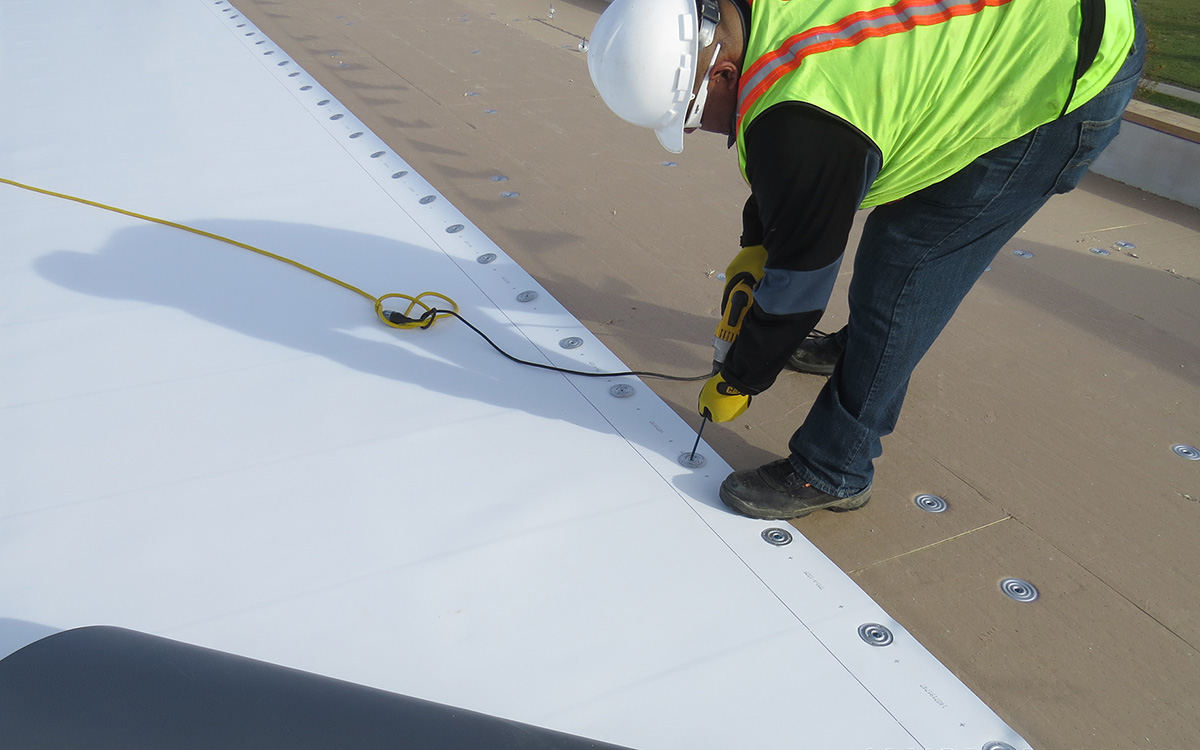
Photo documentation protocols matter as much as the written narrative. We collect geotagged photographs from a consistent angle and distance for each damage condition, with close-up detail shots that show the specific failure mode and overview shots that show the damage location within the roof plan. Every photo set is organized by roof section and tagged with the inspection date and time. When an adjuster's field inspector arrives for their site visit, we provide the photo log as a navigational tool so they can confirm each documented condition at the actual location on the roof rather than trying to correlate photographs to a building without reference points.
When a claim involves disputed coverage — the insurer contends deferred maintenance, the building owner contends storm damage — we provide our documentation as factual field evidence and, when requested, participate in a site meeting with the adjuster to walk through the physical indicators in person. We do not advocate on behalf of the insurer or the insured — our role is accurate field documentation. Accurate documentation of legitimate storm damage is the building owner's strongest tool in any coverage dispute, and it is most credible when it was produced before any repair work obscured the original damage condition.
Roof Questions
How soon after a storm should I get a roof inspection for insurance purposes?
As soon as safely accessible — ideally within 24 to 48 hours of the storm event while physical damage indicators are fresh and unaltered by subsequent weather. Waiting weeks to document damage allows continued weathering that can make fresh storm damage look like older deterioration, which complicates the coverage determination. Call us immediately after any significant wind or rain event that you suspect caused roof damage, and we will prioritize the documentation visit.
Will my commercial property insurer cover wind-driven rain damage to the roof?
Most commercial property policies cover sudden physical damage from a named peril — including wind and wind-driven rain — subject to deductibles and any exclusions specific to your policy. Coverage is typically denied for damage attributable to gradual deterioration, deferred maintenance, or pre-existing conditions. The documentation of the specific failure mode and its relationship to the storm event is what determines how the claim is categorized. Review your policy's specific language and notify your broker promptly after any suspected covered event.
Can you work directly with my insurance adjuster?
Yes. We routinely coordinate site visits with insurance adjusters, walk them through the documented conditions on the roof, and provide supplemental field data if the adjuster identifies gaps in the initial documentation. We do not work as public adjusters — we are roofing contractors providing field documentation and repair scopes — but we are experienced in the language and evidence standards that adjusters use to evaluate commercial roofing claims and we communicate in those terms.
What does your Insurance Claim Documentation package include?
Our standard documentation package includes a written inspection report with damage narrative, a roof plan diagram with damage locations marked, a geotagged photo set organized by roof section and condition type, an assessment of the probable cause of damage with supporting physical indicators, and a repair scope with itemized costs that corresponds to the documented damage. For government facility buildings, we can structure the package to meet specific federal documentation requirements.
Does making a roof insurance claim affect my commercial property premium?
That is a question for your insurance broker — premium impacts depend on your carrier, your claims history, and the size of the claim. What we can tell you is that undocumented storm damage that is not claimed but also not repaired will continue to cause building damage and will be significantly more expensive to remediate later. The decision to file or not file is yours; our role is to provide accurate documentation so you have the information needed to make that decision correctly.