Funeral Home & Mortuary Roofing
A Funeral Home Roof Has to Be Repaired Without Anyone Noticing
Most commercial roofing jobs are judged on the finished membrane. A funeral home job is judged on something harder to measure: whether a grieving family ever knew the work was happening at all. These buildings are never really closed. Visitations run into the evening seven days a week, services can be scheduled on short notice, and the preparation room operates on the timing of death calls rather than a construction calendar. We bring the same quiet, occupied-building discipline here that we use in hospitals and houses of worship, and we treat the family's experience as part of the scope.
We serve funeral homes and mortuaries throughout Tacoma's established neighborhoods. The older mortuaries near downtown and the Stadium District, the family chapels along the South Tacoma Way and 6th Avenue corridors, and the larger facilities serving Pierce County out toward Lakewood and University Place all share the same needs: discreet scheduling, an uninterrupted prep-room exhaust, and a building that always looks composed from the street. Many occupy decades-old structures with original built-up roofs that hide more wear than their surface suggests.
Quiet Scheduling Is the Heart of the Job
We plan funeral home work directly off the director's calendar. We ask for advance notice of every scheduled service and visitation, then sequence so the active chapel and entry areas are protected and free of noise during those hours. Crews and material stay out of the primary entrance and the chapel during services, deliveries are timed to avoid arrivals, and we confirm a watertight dry-in before the facility closes each evening. The goal is simple: families come and go, and the roof work stays invisible to them.
The Preparation Room Exhaust Cannot Be Interrupted
The embalming and preparation area runs under negative pressure with a rooftop exhaust that pulls formaldehyde and other vapors out of the building, and that exhaust has to keep running for OSHA compliance. We locate the prep-room exhaust stack before mobilizing and treat it as its own scope item, flashing around it with the director's sign-off and confirming continuous operation during any work near it. That stack is never capped, blocked, or taken offline for our convenience.
Chapel Spans and Aging Decks Need a Closer Look
Chapel and visitation rooms often span 40 to 60 feet with no intermediate columns, much like a small church sanctuary, and those clear spans generate wind-uplift loads that dictate the fastening pattern and membrane spec. Older Tacoma funeral homes frequently have built-up roofs on wood or concrete decks where a serviceable-looking surface hides wet insulation underneath. We core-sample and run a moisture survey before any recover decision, because skinning a new membrane over a saturated assembly only buries the problem.
Appearance and Drainage Count More Here Than Most Buildings
- Visible roof and parapet faces. On a building where dignity matters, sagging edge metal, streaked parapets, and patched repairs read poorly from the arrival drive. We keep the visible elements clean and consistent.
- The porte-cochere and covered entry. The canopy families pass under is both a first impression and a chronic leak point where it ties to the building. We assess the canopy cover, its flashing, and its drainage as discrete items on every funeral home.
- Drainage and ponding. Older low-slope roofs here are often under-drained. We re-slope with tapered insulation and verify drains and scuppers so water clears the roof instead of standing on it.
A Single Stain Over a Visitation Room Is Unacceptable
In most buildings a small ceiling stain is a maintenance ticket. In a visitation room or chapel it undermines the calm, cared-for setting a family is depending on, and it reflects on the director the moment it appears. The damp Tacoma climate is unforgiving on the older low-slope and built-up roofs these buildings tend to have, and a slow leak can travel and surface far from its source over a finished plaster ceiling. We chase leaks to their actual origin instead of patching the spot where water lands, and we prioritize the interior finishes families see when we plan repairs, so the building stays composed inside and out.
A Membrane and a Manner That Fit the Building
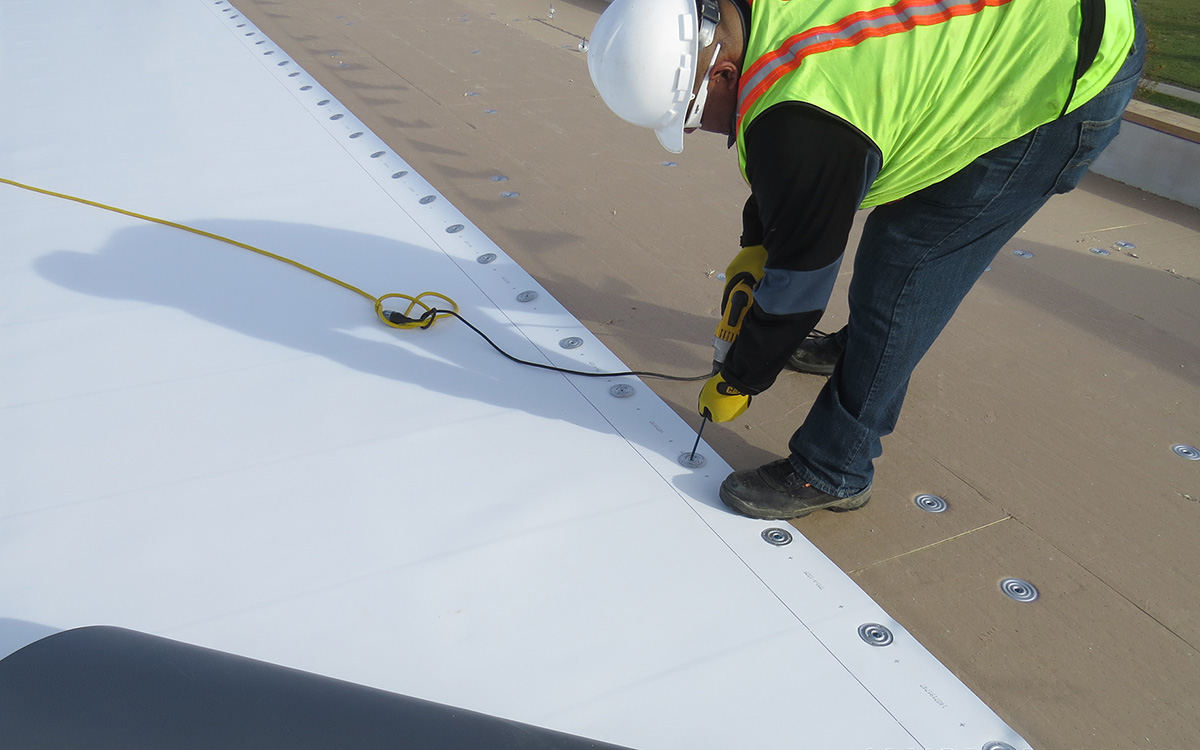
For most flat-roof funeral homes we specify 60-mil TPO mechanically attached over tapered polyiso, which corrects the drainage deficiencies common on older structures and ends the ponding that ages a roof early. For wood-decked chapels we confirm load capacity before setting insulation thickness. Whether the owner is a family running a multi-generational home or a regional operator managing from the corporate level, we work with the same professional discretion the setting calls for.
Funeral Home & Mortuary Roofing Questions
How do you work around services and visitations?
We schedule off the funeral director's calendar, take advance notice of every service and visitation, and sequence so active chapel and entry areas stay protected and quiet during those hours. We keep crews and material clear of the main entrance and chapel during services and confirm a dry-in before the building closes each evening.
How do you handle the preparation room exhaust stack?
It stays running the entire time. We locate the prep-room exhaust before mobilizing, flash it as a separate scope item with the director's approval, and confirm continuous operation during any work near it. The stack is never blocked, capped, or shut down for roofing convenience.
What roof system do you put on a funeral home?
Usually 60-mil TPO mechanically attached over tapered polyiso, which fixes the drainage problems common on older buildings and stops the ponding that shortens a roof's life. On wood-decked chapels we confirm load capacity before specifying insulation thickness.
Can you handle the chapel and sanctuary spans?
Yes. Clear-span chapel roofs carry the same long-span uplift demands as a church sanctuary. We evaluate the deck type, span, and existing attachment, then specify fastening backed by pull-out testing or structural documentation for steel or wood decks.
Do you take care of the porte-cochere and covered entry?
Yes. The entry canopy is part of every assessment because the canopy-to-building flashing and its drainage are a common source of chronic leaks on older facilities. We address the canopy cover, flashing, and drains as their own scope items.