DST Roofing Services
Delaware Statutory Trust sponsors acquiring Pacific Northwest industrial and warehouse assets in Tacoma face a roofing environment unlike most other major DST markets. The combination of persistent rainfall, moss accumulation, and the seismic activity that characterizes the Puget Sound region means that roof condition reports demand a level of scrutiny that goes well beyond a standard flat-roof walkthrough. When a DST sponsor is acquiring a multi-tenant industrial park along the Port of Tacoma corridor or a Class B flex-warehouse complex near the Puyallup industrial zone, the offering memorandum must reflect a reserve schedule that accounts for the Pacific Northwest's specific degradation patterns — not a generic national template lifted from a Sun Belt deal.
The 1031 exchange timeline creates real pressure for out-of-area sponsors assembling DST offerings. A 45-day identification window and a 180-day close window leave almost no margin for discovery surprises. When a sponsor based in Dallas or Atlanta is underwriting a Tacoma industrial portfolio, they are not driving by the property on a Tuesday afternoon. They are relying entirely on third-party reports, and a roofing inspection that comes back clean but misses early-stage ponding damage on a TPO membrane over a 120,000-square-foot distribution warehouse can cost passive investors several months of interrupted distributions when the roof fails 18 months into the hold period.
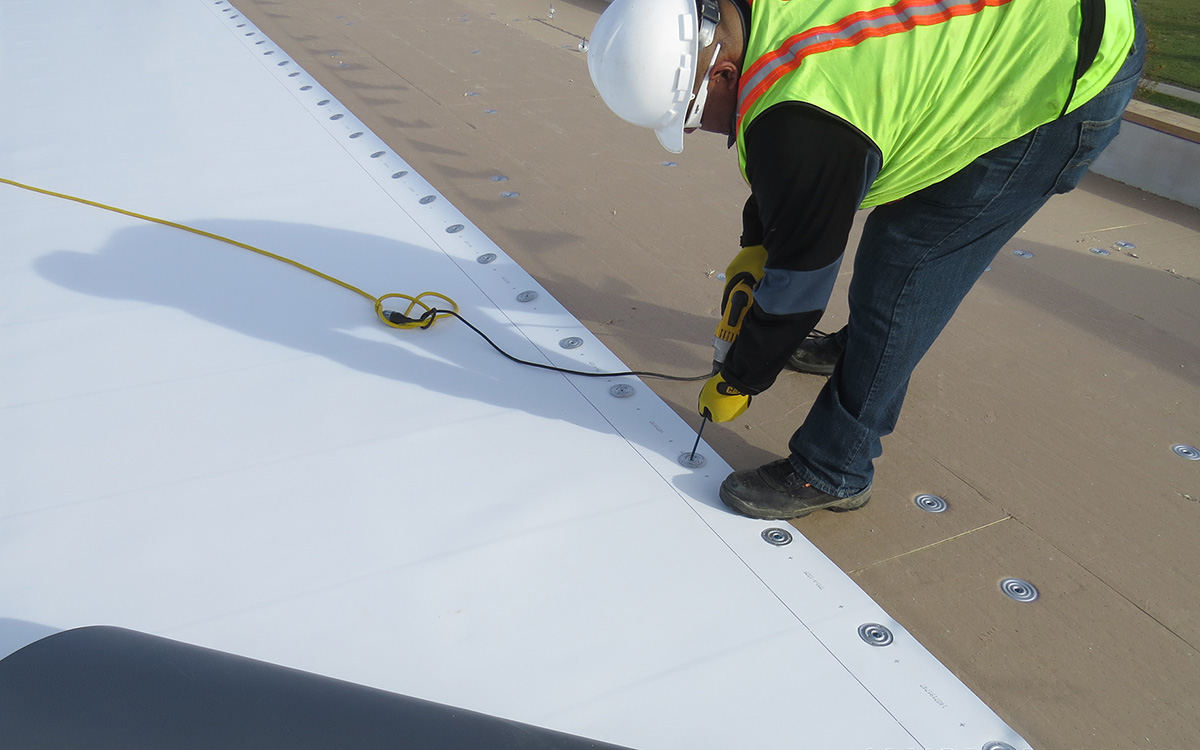
Pacific Northwest industrial roofing in Tacoma typically involves either built-up roofing systems on older structures or single-ply TPO and EPDM membranes on buildings constructed after the mid-1990s. Both system types require specific inspection protocols. The constant moisture exposure accelerates seam separation and membrane edge-lifting in ways that are not always visible from the roof surface without probing. A competent local roofing contractor understands that what looks like surface aging in a dry-climate market may actually represent active water infiltration when the substrate has been saturated over multiple wet seasons without adequate drainage maintenance.
DST sponsors need a local roofing partner who can deliver a condition report with IR moisture scan data, core sample analysis, and a clear remaining-useful-life estimate within a compressed due diligence window. When the offering memorandum goes to broker-dealers and their registered investment advisor networks, the reserve adequacy section carries significant weight. Institutional-quality underwriting for a Tacoma DST will specify not just a per-square-foot reserve figure but a time-phased schedule tied to the specific roof systems on each asset in the portfolio, with consideration for the regional labor market and the cost premium associated with Pacific Northwest union roofing contractors.
Moss and algae remediation is a line item that catches sponsors off guard. On low-slope roofs in the Tacoma area, biological growth is not cosmetic — it holds moisture against the membrane, accelerates UV degradation, and can compromise warranty coverage if the manufacturer's maintenance requirements have not been followed. A thorough pre-acquisition inspection should document the current state of biological growth, flag any areas where existing maintenance has lapsed, and provide a remediation cost estimate that the sponsor can either negotiate into the purchase price or build into the year-one capital budget that appears in the offering memorandum.
The hold period for a typical DST ranges from five to ten years. During that time, the asset manager is responsible for maintaining the property in a condition that protects investor equity and supports ongoing distributions. In a passive investor structure, there is no limited partner vote to approve a major capital expenditure — the DST trustee and the asset manager make those decisions on behalf of dozens or hundreds of beneficial interest holders. That makes the pre-acquisition roof condition report the single most important document for forecasting hold-period roof capital expenditures. A $2.5 million reserve underestimate on a Tacoma industrial portfolio translates directly into a distribution shortfall that triggers investor calls and, in the worst case, regulatory scrutiny of the offering.
Local knowledge matters for emergency response as well. When a winter storm event causes membrane damage on a Tacoma warehouse roof, the asset manager needs a contractor relationship already in place — not a cold call to a roofing company that has never seen the building. Emergency tarping, temporary drainage solutions, and rapid assessment of whether business interruption is likely all require a trusted local contractor who understands the asset, the roof system, and the urgency of protecting tenant relationships during an active storm season. Tacoma-area sponsors active in the DST market increasingly specify a preferred contractor list in the asset management agreement precisely because emergency response time directly affects whether a roof incident becomes a minor capital event or a full distribution interruption.
Reserve modeling for Pacific Northwest DST assets should also account for the region's seismic exposure. While Tacoma roofs are not commonly damaged by earthquakes, the underlying risk affects insurance terms, and a sponsor preparing an offering memorandum for a SEC-qualified DST offering must represent the full risk profile of the asset. Roof-to-wall connections, parapet conditions, and the state of any mechanical equipment curb penetrations all become relevant when underwriters are evaluating seismic exposure on an older industrial building. A thorough roof inspection that integrates structural observations into the condition report gives the sponsor's legal and compliance team the documentation they need to make accurate disclosures.
DST activity in the Tacoma industrial market has grown meaningfully as 1031 investors seek yield alternatives to coastal multifamily. Port-adjacent logistics facilities, cold storage assets serving Pacific Rim import channels, and multi-tenant flex warehouses near Joint Base Lewis-McChord all appear in DST portfolios assembled by national sponsors. In each case, the roof is the asset's first line of defense against the Pacific Northwest climate, and a properly scoped pre-acquisition inspection with fast turnaround is not a cost — it is the foundation of an offering memorandum that can withstand broker-dealer due diligence review.
- How quickly can you deliver a roof condition report for a DST acquisition in Tacoma on a 1031 timeline?
- We prioritize DST and 1031 assignments and can typically complete an inspection and deliver a written report with IR moisture scan data within five to seven business days of site access, fitting within the compressed identification and closing windows that exchange buyers face.
- What should a Tacoma DST offering memorandum include for roof reserves?
- The reserve section should specify a per-square-foot annual reserve figure for each roof system in the portfolio, tied to a time-phased replacement schedule and adjusted for Pacific Northwest labor costs, moss remediation cycles, and the specific membrane types and ages on each building.
- How do you handle roof maintenance during the DST hold period in a passive investor structure?
- We establish a preventive maintenance schedule at acquisition and provide the asset manager with documented inspection reports after each visit, giving the DST trustee and asset manager the record-keeping needed to demonstrate prudent stewardship to investors and regulators throughout the hold period.
- What happens if a roof fails and interrupts tenant operations at a Tacoma DST property?
- We maintain emergency response capacity for active clients, which means rapid deployment for assessment, emergency tarping, and temporary drainage — minimizing business interruption, protecting the tenant relationship, and limiting the duration of any distribution impact to beneficial interest holders.
- Do Pacific Northwest moisture conditions require different inspection methods than standard commercial roof inspections?
- Yes — infrared moisture scanning is essential in this climate because saturation can exist beneath a visually intact membrane surface. Core sampling at suspect areas provides ground truth, and our reports document both findings so the sponsor has defensible data for the offering memorandum's condition disclosure.